Table of Contents
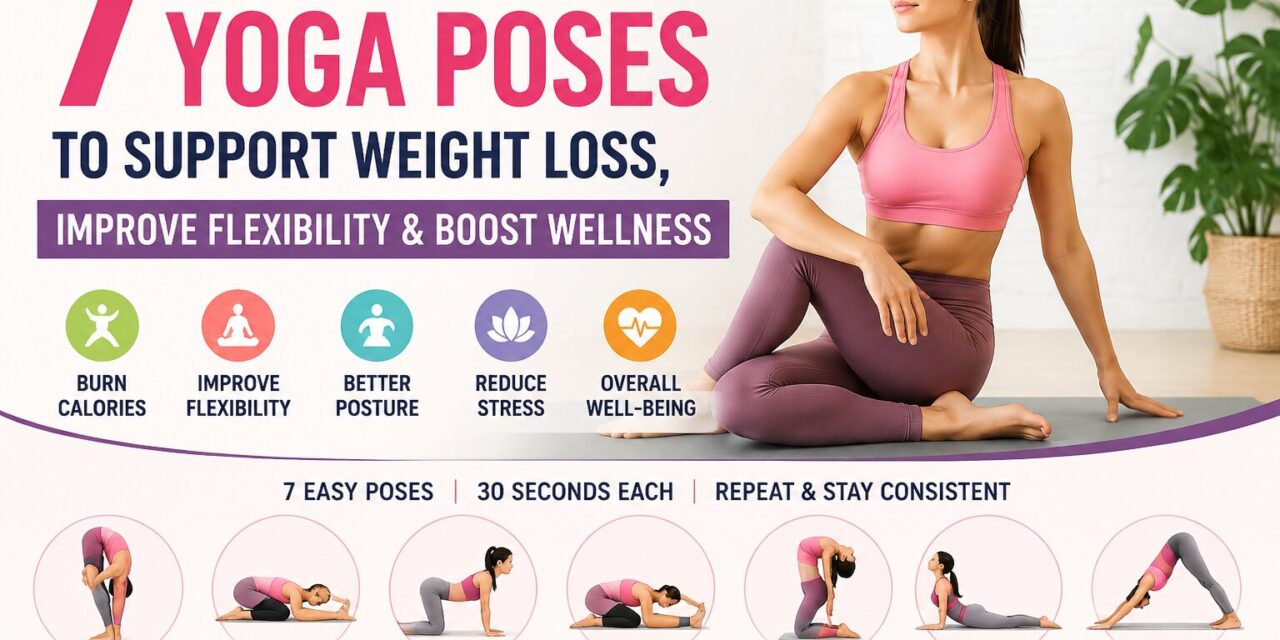
7 Beginner-Friendly Yoga Poses to Support Weight Loss, Improve Flexibility, and Boost Overall Wellness
Yoga is one of the most effective low-impact exercises for improving flexibility, building strength, reducing stress, and supporting a healthy weight management routine. While yoga alone isn’t a quick solution for weight loss, practising it consistently alongside a balanced diet and regular physical activity can help you stay active, burn calories, and develop healthy habits.
If you’re new to yoga, these seven beginner-friendly poses are simple to learn and can be practiced at home without any special equipment. Aim to hold each pose for about 30 seconds and repeat as recommended for a gentle full-body workout.
Why Choose Yoga for Fitness?
Yoga offers much more than stretching. Regular practice can:
- Improve flexibility and mobility
- Strengthen muscles and joints
- Enhance posture and balance
- Reduce stress and promote relaxation
- Support healthy weight management
- Increase body awareness
- Improve breathing and circulation
- Boost overall physical and mental well-being
For the best results, practice yoga at least 3–5 days per week and combine it with nutritious eating and adequate hydration.
1. Standing Forward Fold (Uttanasana)
Hold: 30 seconds × 3 repetitions
The Standing Forward Fold gently stretches your hamstrings, calves, and lower back while helping release tension throughout the body.
Benefits
- Improves flexibility
- Stretches the spine
- Helps relax tight muscles
- Supports better posture
How to Do It
- Stand with your feet hip-width apart.
- Bend forward from your hips.
- Let your hands reach toward the floor or your ankles.
- Keep your knees slightly bent if needed.
- Relax your neck and breathe deeply.
2. Child’s Pose (Balasana)
Hold: 30 seconds × 5 repetitions
Child’s Pose is a gentle resting position that stretches the back, hips, and shoulders while promoting relaxation.
Benefits
- Relieves muscle tension
- Improves flexibility
- Encourages deep breathing
- Reduces stress
How to Do It
- Kneel on the floor.
- Sit back on your heels.
- Extend your arms forward.
- Rest your forehead on the mat.
- Breathe slowly and deeply.
3. Cat-Cow Pose (Marjaryasana-Bitilasana)
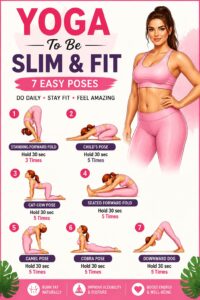
Hold: 30 seconds × 5 repetitions
Cat-Cow is a flowing movement that increases spinal mobility and warms up the entire body.
Benefits
- Improves spinal flexibility
- Strengthens the core
- Relieves back stiffness
- Enhances posture
How to Do It
- Start on your hands and knees.
- Inhale while arching your back (Cow Pose).
- Exhale while rounding your spine (Cat Pose).
- Move slowly with your breath.
Read More: Natural Weight Loss Supplements: Unlocking a Healthier You with Mitolyn
4. Seated Forward Fold (Paschimottanasana)
Hold: 30 seconds × 5 repetitions
This classic yoga stretch targets the hamstrings, calves, and lower back.
Benefits
- Improves flexibility
- Stretches the legs
- Encourages relaxation
- Supports healthy posture
How to Do It
- Sit with your legs extended.
- Reach toward your feet.
- Keep your back as straight as possible.
- Avoid forcing the stretch.
- Breathe calmly.
5. Camel Pose (Ustrasana)
Hold: 30 seconds × 5 repetitions
Camel Pose is a gentle backbend that opens the chest and stretches the front of the body.
Benefits
- Improves spinal flexibility
- Opens the chest and shoulders
- Strengthens the back
- Enhances posture
How to Do It
- Kneel with your knees hip-width apart.
- Place your hands on your lower back or heels.
- Lift your chest toward the ceiling.
- Keep your neck comfortable.
- Hold while breathing steadily.
6. Cobra Pose (Bhujangasana)
Hold: 30 seconds × 5 repetitions
Cobra Pose strengthens the back muscles while stretching the chest and abdomen.
Benefits
- Builds back strength
- Improves posture
- Increases spinal flexibility
- Opens the chest
How to Do It
- Lie face down.
- Place your hands beneath your shoulders.
- Press gently into your palms.
- Lift your chest while keeping your hips on the floor.
- Keep your elbows slightly bent.
7. Downward-Facing Dog (Adho Mukha Svanasana)
Hold: 30 seconds × 5 repetitions
One of the most recognized yoga poses, Downward Dog stretches and strengthens multiple muscle groups at once.
Benefits
- Strengthens the arms and legs
- Improves flexibility
- Stretches the spine
- Supports full-body mobility
How to Do It
- Begin on your hands and knees.
- Lift your hips toward the ceiling.
- Form an inverted “V” shape.
- Keep your hands shoulder-width apart.
- Press your heels toward the floor as comfortable.
Sample 15-Minute Beginner Yoga Routine
| Pose | Duration |
|---|---|
| Standing Forward Fold | 30 sec × 3 |
| Child’s Pose | 30 sec × 5 |
| Cat-Cow Pose | 30 sec × 5 |
| Seated Forward Fold | 30 sec × 5 |
| Camel Pose | 30 sec × 5 |
| Cobra Pose | 30 sec × 5 |
| Downward-Facing Dog | 30 sec × 5 |
Finish your session with 2–3 minutes of relaxed breathing or meditation.
Tips for Better Results
- Practice on a non-slip yoga mat.
- Wear comfortable clothing.
- Stay hydrated before and after your workout.
- Focus on proper form rather than stretching too deeply.
- Breathe slowly and evenly throughout each pose.
- Pair your yoga practice with a balanced diet and regular physical activity for overall health and weight management.
Frequently Asked Questions
Can beginners do these yoga poses?
Yes. These poses are beginner-friendly and can be modified based on your flexibility and fitness level.
Can yoga help with weight loss?
Yoga can support weight management by increasing physical activity, improving strength and flexibility, and helping reduce stress. It is most effective when combined with healthy eating and other forms of exercise.
How often should I practice?
Aim for at least 3–5 sessions per week for consistent progress.
Do I need any equipment?
A yoga mat is recommended for comfort and stability, but many poses can also be practiced on a soft, non-slip surface.
Final Thoughts
Practicing these 7 beginner-friendly yoga poses is an excellent way to improve flexibility, strengthen your body, and support a healthy lifestyle. Remember that lasting fitness results come from consistency, patience, and a balanced approach to exercise and nutrition. Start with just a few minutes each day, and gradually build a routine that works for you. Over time, you’ll likely notice improvements in your mobility, posture, energy levels, and overall well-being.